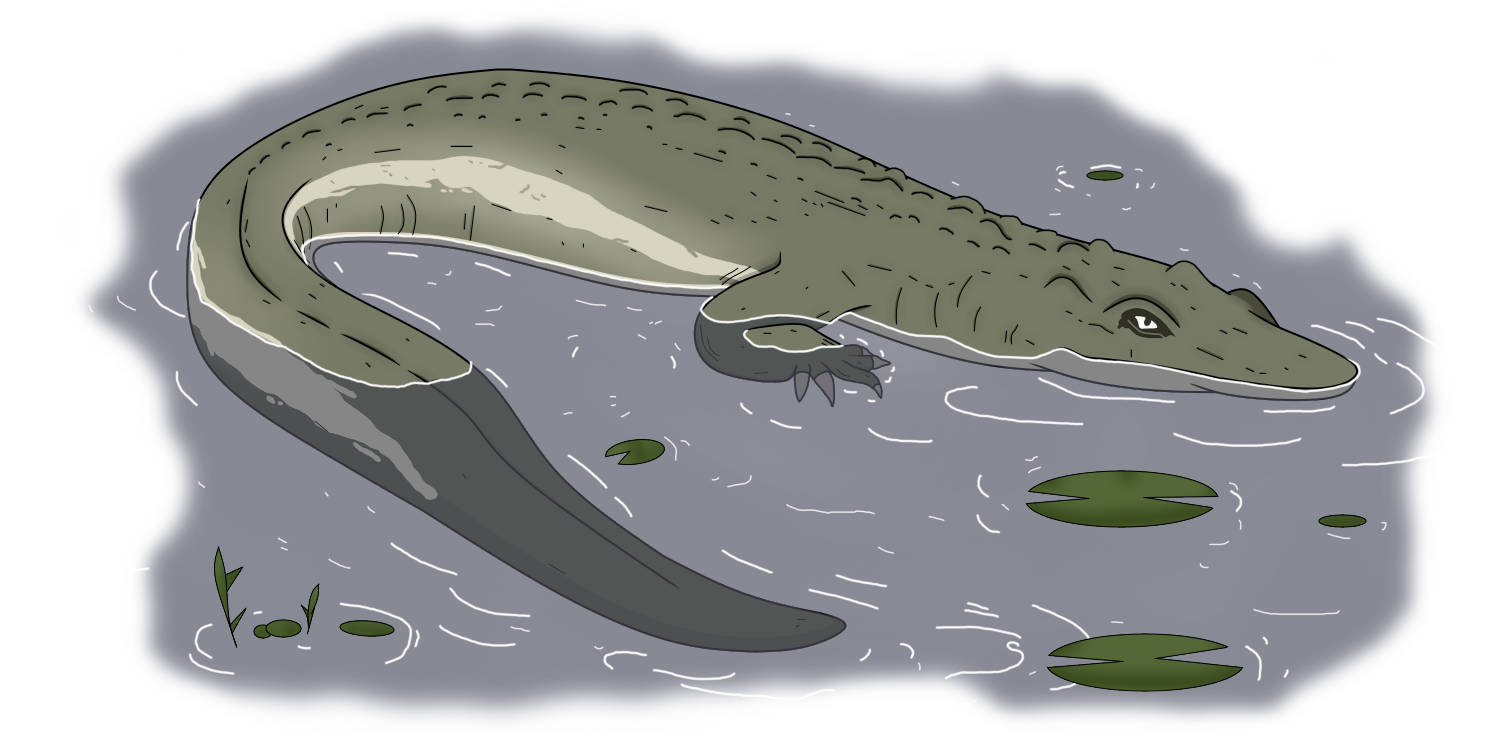
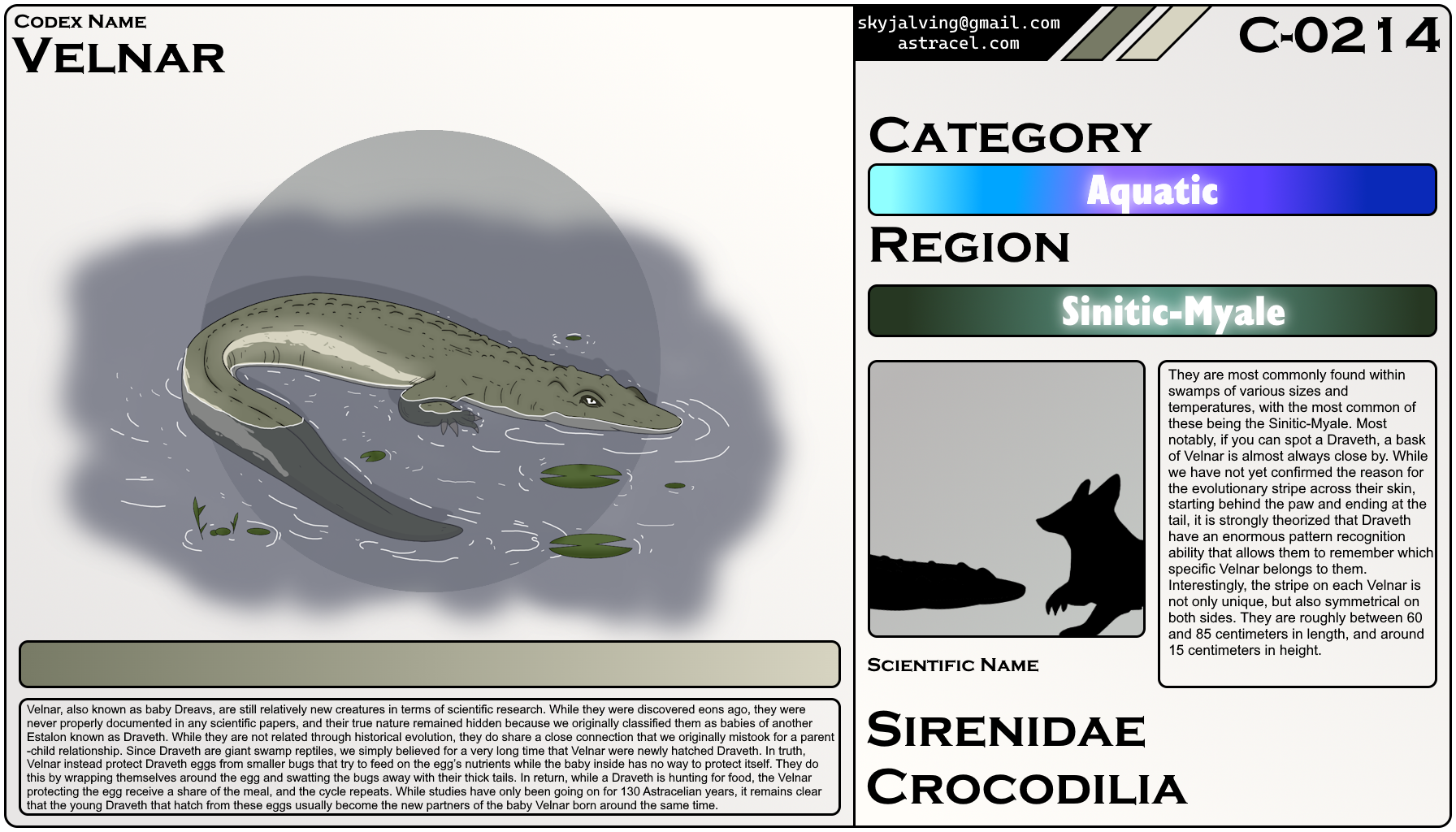
Velnar, also known as
baby Dreavs, are still relatively new creatures in terms of scientific research. While they were discovered eons ago, they were never properly documented in any scientific papers, and their true nature remained hidden because we originally classified them as babies of another
Estalon known as
Draveth. While they are not related through historical evolution, they do share a close connection that we originally mistook for a parent-child relationship. Since
Draveth are giant swamp reptiles, we simply believed for a very long time that Velnar were newly hatched
Draveth. In truth, Velnar instead protect
Draveth eggs from smaller bugs that try to feed on the egg’s nutrients while the baby inside has no way to protect itself. They do this by wrapping themselves around the egg and swatting the bugs away with their thick tails. In return, while a
Draveth is hunting for food, the Velnar protecting the egg receive a share of the meal, and the cycle repeats. While studies have only been going on for 130 Astracelian years, it remains clear that the young
Draveth that hatch from these eggs usually become the new partners of the baby Velnar born around the same time.